
Losing weight doesn’t mean starving yourself or giving up your favorite Indian foods. In fact, one of the biggest myths about weight loss is that you need expensive diets, imported superfoods, or bland meals to see results.
The truth is much simpler.
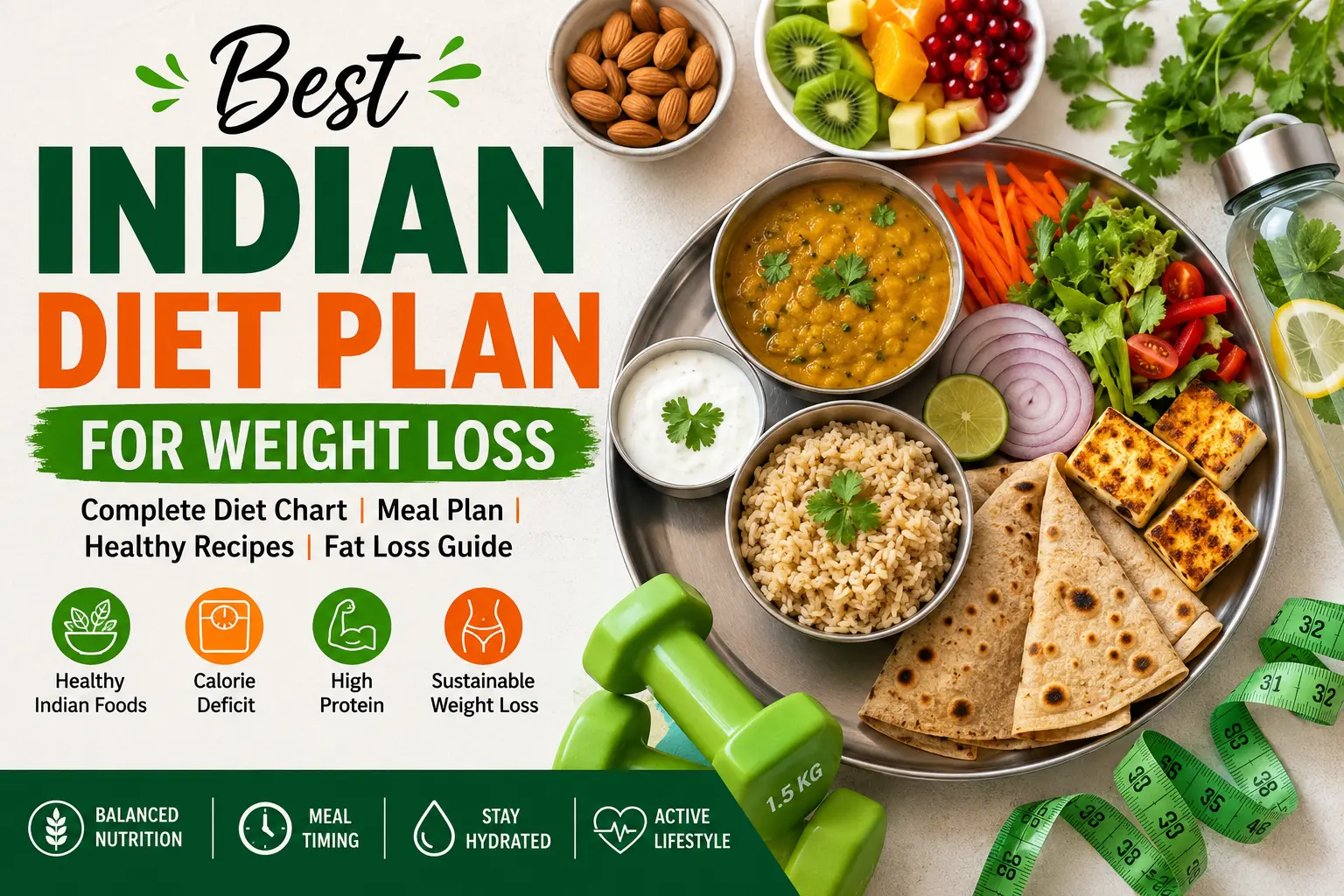
A well-balanced Indian diet plan for weight loss can help you lose body fat, improve your energy levels, support your metabolism, and maintain muscle mass—all while enjoying delicious homemade meals.
Traditional Indian cuisine already includes many nutrient-rich foods such as lentils, vegetables, whole grains, yogurt, spices, fruits, nuts, and healthy proteins. The challenge isn’t Indian food itself—it’s oversized portions, excessive oil, sugary drinks, frequent snacking, and an inactive lifestyle.
Whether you’re a student, working professional, homemaker, or senior citizen, following a structured healthy Indian meal plan can help you achieve sustainable weight loss without extreme restrictions.
In this comprehensive guide, you’ll learn:
- How weight loss actually works
- The science of calorie deficit
- Importance of protein for fat loss
- Best Indian foods for weight loss
- Complete vegetarian and non-vegetarian diet charts
- Meal timing strategies
- Portion control techniques
- Practical tips for long-term success
Let’s begin by understanding how your body loses fat.
Why Most Weight Loss Diets Fail
Many people start dieting with excitement but quit within a few weeks because they follow unrealistic plans.
Common mistakes include:
- Skipping meals
- Completely avoiding carbohydrates
- Drinking only juices
- Following celebrity diets
- Starving to lose weight quickly
- Depending on detox drinks
- Eliminating entire food groups
These approaches may lead to temporary weight loss, but most people regain the weight because the diet is impossible to maintain.
Instead, sustainable fat loss comes from creating healthy habits that fit your lifestyle.
The best weight loss diet chart is one that you can realistically follow for months—not just a few days.
How Weight Loss Actually Works
Weight loss is based on a simple scientific principle:
You lose body fat when your body burns more calories than it consumes.
This is called a calorie deficit.
Imagine your body as a bank account.
- Calories you eat = Money deposited
- Calories you burn = Money spent
If you spend more than you deposit, your balance decreases. Similarly, if you burn more calories than you consume, your body uses stored fat for energy.
However, creating an extreme calorie deficit is not healthy. Eating too little can:
- Slow your metabolism
- Increase hunger
- Cause muscle loss
- Reduce energy
- Lead to nutrient deficiencies
A moderate calorie deficit of approximately 300–500 calories per day is generally considered effective and sustainable for gradual fat loss in many adults, though individual needs vary.
Understanding the Calorie Deficit
What Is a Calorie?
A calorie is a unit of energy that your body uses for essential functions such as:
- Breathing
- Digestion
- Walking
- Exercising
- Thinking
- Repairing tissues
Every food contains calories, but not all calories provide the same nutritional value.
Nutrient-Dense Foods
These foods provide vitamins, minerals, fiber, and protein along with calories.
Examples include:
- Dal
- Vegetables
- Fruits
- Eggs
- Chicken breast
- Fish
- Paneer
- Greek yogurt
- Millets
- Oats
Empty-Calorie Foods
These foods are high in calories but low in nutrients.
Examples include:
- Sugary drinks
- Deep-fried snacks
- Sweets
- Bakery products
- Chips
- Processed fast food
Replacing empty calories with nutrient-dense Indian foods helps you feel fuller while supporting weight loss.
Why Protein Is the Most Important Nutrient for Fat Loss
If there is one nutrient that deserves special attention during weight loss, it is protein.
Protein helps your body:
- Preserve lean muscle mass
- Increase satiety
- Reduce cravings
- Support recovery after exercise
- Slightly increase calorie expenditure through digestion (the thermic effect of food)
Without enough protein, much of the weight you lose may come from muscle rather than fat.
High-Protein Indian Foods
Vegetarian Options
| Food | Approximate Protein |
|---|---|
| Paneer (100 g) | 18–20 g |
| Greek yogurt (200 g) | 18–20 g |
| Tofu (100 g) | 8–10 g |
| Soy chunks (50 g dry) | 25–26 g |
| Moong dal (1 cup cooked) | 14 g |
| Chickpeas (1 cup cooked) | 14–15 g |
| Rajma (1 cup cooked) | 13–15 g |
| Sprouts (1 cup) | 12–15 g |
Non-Vegetarian Options
| Food | Approximate Protein |
|---|---|
| Chicken breast (100 g cooked) | 30–31 g |
| Eggs (1 large) | 6–7 g |
| Fish (100 g) | 20–25 g |
| Prawns (100 g) | 22–24 g |
| Lean turkey (100 g) | 28–30 g |
Aim to include a quality protein source in every major meal.
Best Indian Foods for Fat Loss
One of the advantages of an Indian diet is its variety. You don’t need imported health foods to lose weight.
Whole Grains
Choose:
- Brown rice
- Millets
- Jowar
- Bajra
- Ragi
- Whole wheat
- Oats
These provide fiber, vitamins, and minerals that support overall health.
Lentils and Legumes
Excellent options include:
- Moong dal
- Masoor dal
- Chana dal
- Rajma
- Black chana
- Chickpeas
These foods combine protein with fiber, helping you stay full for longer.
Vegetables
Fill half your plate with colorful vegetables such as:
- Spinach
- Broccoli
- Cabbage
- Cauliflower
- Bottle gourd
- Bitter gourd
- Beans
- Carrots
- Capsicum
- Cucumber
- Tomatoes
Aim for variety to maximize nutrient intake.
Fruits
Enjoy whole fruits like:
- Apples
- Guava
- Oranges
- Papaya
- Berries
- Pears
- Watermelon (in moderation as part of your daily intake)
Whole fruits are generally a better choice than fruit juices because they retain fiber.
Healthy Fats
Healthy fats are important for hormone production and nutrient absorption.
Include moderate portions of:
- Almonds
- Walnuts
- Peanuts
- Flaxseeds
- Chia seeds
- Pumpkin seeds
- Sesame seeds
Healthy Indian Kitchen Foods That Support Weight Loss
Many everyday ingredients in an Indian kitchen can fit into a balanced weight loss plan.
| Food | Benefits |
|---|---|
| Turmeric | Adds flavor and contains curcumin, a natural compound studied for its anti-inflammatory properties. |
| Ginger | Commonly used in cooking and may support digestion for some people. |
| Garlic | Adds flavor and nutrients to meals. |
| Cumin | Enhances taste without adding significant calories. |
| Cinnamon | Can be used to flavor oats, yogurt, or tea without sugar. |
| Fenugreek Seeds | A source of fiber that may help increase fullness. |
| Lemon | A low-calorie way to add flavor to meals and water. |
| Green Tea | A calorie-free beverage when consumed without sugar. |
These foods are not “fat-burning miracles,” but they can be part of an overall healthy eating pattern.
Complete Indian Diet Chart for Weight Loss
| Time | Meal |
|---|---|
| 6:30–7:00 AM | Water, optional unsweetened tea or coffee |
| 8:00 AM | High-protein breakfast |
| 11:00 AM | Fruit + nuts |
| 1:00 PM | Balanced lunch |
| 4:30 PM | Healthy snack |
| 7:30 PM | Protein-rich dinner |
| 9:00 PM | Herbal tea or warm milk (optional, depending on your calorie goals) |
The exact timing isn’t as important as meeting your daily calorie and nutrient needs consistently.
Vegetarian Weight Loss Diet Plan
Breakfast
Choose one:
- Vegetable oats with curd
- Moong dal chilla with mint chutney
- Vegetable upma with sprouts
- Besan chilla with paneer
- Greek yogurt with fruit and seeds
Mid-Morning
- Apple
- Orange
- Guava
- Papaya
- Coconut water (unsweetened)
Lunch
- 2 whole wheat rotis
- Mixed vegetable sabzi
- Dal
- Salad
- Curd
Evening Snack
- Roasted chana
- Sprouts chaat
- Buttermilk
- Green tea with a handful of nuts
Dinner
- Paneer stir-fry with vegetables
- Tofu curry
- Mixed vegetable soup with sprouts
- Dal with sautéed vegetables
Non-Vegetarian Weight Loss Diet Plan
Breakfast
- Boiled eggs with whole wheat toast
- Vegetable omelet
- Greek yogurt with nuts
- Oats with milk and seeds
Lunch
- Grilled chicken
- Brown rice or whole wheat roti
- Mixed vegetables
- Salad
- Curd
Evening Snack
- Boiled eggs
- Roasted chickpeas
- Buttermilk
- Fruit
Dinner
- Grilled fish
- Chicken soup
- Chicken salad
- Stir-fried vegetables with lean protein
Healthy Indian Breakfast Ideas for Weight Loss
Breakfast is often called the most important meal of the day because it provides the energy your body needs after an overnight fast. While skipping breakfast doesn’t automatically prevent weight loss, many people find that eating a balanced, protein-rich breakfast helps reduce hunger and prevents overeating later in the day.
A healthy breakfast should contain:
- High-quality protein
- Complex carbohydrates
- Fiber
- Healthy fats
- Vitamins and minerals
15 Healthy Indian Breakfast Ideas
| Breakfast | Why It’s Good for Weight Loss |
|---|---|
| Vegetable Oats Upma | High in fiber and keeps you full longer. |
| Moong Dal Chilla | Rich in plant protein and easy to digest. |
| Besan Chilla with Paneer | Combines protein with fiber for lasting satiety. |
| Vegetable Poha | A lighter breakfast when prepared with less oil and plenty of vegetables. |
| Vegetable Upma | Provides complex carbohydrates and fiber. |
| Idli with Sambar | Fermented, light, and served with protein-rich lentil sambar. |
| Dosa with Sambar | Better when cooked with minimal oil and paired with sambar. |
| Greek Yogurt with Fruits | High in protein and supports fullness. |
| Sprouts Salad | Packed with protein, fiber, vitamins, and minerals. |
| Boiled Eggs with Whole Wheat Toast | Excellent protein source for non-vegetarians. |
| Vegetable Omelet | Rich in protein and nutrients. |
| Ragi Porridge | High in calcium and fiber. |
| Millet Khichdi | Balanced meal with whole grains and vegetables. |
| Peanut Butter on Whole Wheat Toast | Healthy fats with sustained energy (watch portions). |
| Fruit Smoothie with Protein | Blend milk, banana, berries, oats, and protein for a filling meal. |
Weight Loss Tip: Aim for 20–30 grams of protein at breakfast whenever possible to support muscle maintenance and help control hunger.
Healthy Indian Lunch Ideas for Weight Loss
Lunch should be balanced and satisfying. Instead of eating until you’re overly full, build your plate with the right proportions.
Healthy Plate Method
- 🥗 50% Vegetables
- 🍗🥣 25% Protein
- 🌾 25% Whole Grains
Vegetarian Lunch Options
- 2 Whole Wheat Rotis + Dal + Mixed Vegetable Curry + Salad
- Brown Rice + Rajma + Cucumber Salad
- Bajra Roti + Palak Paneer + Salad
- Millet Khichdi + Yogurt
- Vegetable Quinoa Pulao + Raita
- Chole + Brown Rice + Salad
- Tofu Stir-Fry + Multigrain Roti
Non-Vegetarian Lunch Options
- Grilled Chicken + Brown Rice + Vegetables
- Fish Curry + Millet Roti + Salad
- Chicken Curry (less oil) + Whole Wheat Roti
- Egg Curry + Brown Rice
- Grilled Fish + Vegetable Soup
- Chicken Salad with Mixed Greens
- Stir-Fried Chicken with Vegetables
Tip: Add a bowl of salad before lunch. It can increase fullness and help you manage portion sizes.
Healthy Indian Dinner Ideas
Dinner should be lighter than lunch while still providing enough protein and vegetables to support recovery and satiety.
Vegetarian Dinner
- Paneer Bhurji + Salad
- Tofu Stir-Fry
- Vegetable Soup + Sprouts
- Mixed Dal Soup
- Palak Paneer + Steamed Vegetables
- Moong Dal Khichdi + Curd
- Grilled Paneer with Sautéed Vegetables
Non-Vegetarian Dinner
- Grilled Chicken Breast + Vegetables
- Fish + Stir-Fried Vegetables
- Chicken Soup + Salad
- Egg Bhurji + Whole Wheat Roti
- Chicken Salad
- Grilled Fish + Broccoli
- Boiled Eggs + Vegetable Soup
Try to finish dinner 2–3 hours before bedtime for comfort and better digestion.
Healthy Indian Snacks for Fat Loss
Healthy snacks can help prevent excessive hunger between meals.
Best Snack Options
- Roasted Chana
- Mixed Sprouts
- Greek Yogurt
- Apple
- Orange
- Guava
- Pear
- Cucumber Slices
- Carrot Sticks
- Handful of Almonds
- Walnuts
- Buttermilk
- Coconut Water (unsweetened)
- Boiled Eggs
- Cottage Cheese Cubes
- Homemade Hummus with Vegetable Sticks
Avoid frequent snacking on:
- Chips
- Namkeen
- Fried snacks
- Sugary biscuits
- Soft drinks
- Packaged sweets
Portion Control: The Secret to Sustainable Weight Loss
Even healthy foods can contribute to excess calorie intake if eaten in very large quantities. Portion control is one of the easiest ways to create a calorie deficit without eliminating your favorite meals.
Simple Portion Guide
| Food Group | Recommended Portion |
|---|---|
| Protein | About the size of your palm |
| Vegetables | Half of your plate |
| Whole Grains | About one-quarter of your plate |
| Healthy Fats | 1–2 teaspoons of oil or a small handful of nuts |
Easy Portion Tips
- Use a smaller plate.
- Eat slowly and chew thoroughly.
- Stop eating when you feel comfortably satisfied, not overly full.
- Avoid eating directly from large packets or containers.
- Serve food onto a plate instead of eating from the cooking pot.
Meal Timing for Better Weight Management
While total daily calorie intake is the primary driver of weight loss, regular meal timing can help many people manage hunger and maintain healthy eating habits.
Sample Daily Schedule
| Time | Meal |
|---|---|
| 7:00 AM | Water + Optional Tea/Coffee (without added sugar) |
| 8:00 AM | Breakfast |
| 11:00 AM | Healthy Snack |
| 1:00 PM | Lunch |
| 4:30 PM | Evening Snack |
| 7:30 PM | Dinner |
Hydration Tip: Drink enough water throughout the day. Thirst is sometimes mistaken for hunger.
Indian Weight Loss Grocery List
Keeping healthy foods at home makes it easier to stick to your plan.
Whole Grains
- Oats
- Brown Rice
- Whole Wheat Flour
- Ragi
- Jowar
- Bajra
- Quinoa (optional)
Protein Sources
Vegetarian
- Paneer
- Tofu
- Greek Yogurt
- Curd
- Lentils (Dal)
- Rajma
- Chickpeas
- Black Chana
- Soy Chunks
Non-Vegetarian
- Eggs
- Chicken Breast
- Fish
- Prawns (optional)
Vegetables
- Spinach
- Broccoli
- Cauliflower
- Cabbage
- Carrots
- Cucumber
- Tomatoes
- Capsicum
- Bottle Gourd
- Bitter Gourd
- Beans
Fruits
- Apples
- Guava
- Oranges
- Papaya
- Pears
- Seasonal berries (if available)
Healthy Fats
- Almonds
- Walnuts
- Peanuts
- Flaxseeds
- Chia Seeds
- Pumpkin Seeds
Spices & Flavorings
- Turmeric
- Cumin
- Coriander
- Black Pepper
- Ginger
- Garlic
- Cinnamon
Budget-Friendly Indian Weight Loss Diet
Eating healthy doesn’t have to be expensive. Many affordable Indian staples are naturally nutritious and support fat loss.
Affordable Protein Sources
- Moong Dal
- Chana Dal
- Masoor Dal
- Eggs
- Black Chana
- Soy Chunks
- Curd
- Peanuts
Affordable Carbohydrates
- Brown Rice
- Whole Wheat Roti
- Oats
- Seasonal Millets
Budget-Friendly Vegetables
Buy locally available, seasonal vegetables to save money while increasing variety.
Meal Planning for Busy People
A busy schedule shouldn’t stop you from eating well. A little preparation can make healthy eating much easier.
Weekly Meal Prep Tips
- Cook dal in advance.
- Grill or boil chicken for 2–3 days.
- Chop vegetables and store them in airtight containers.
- Prepare overnight oats for quick breakfasts.
- Keep roasted chana, nuts, and fruits ready for snacks.
- Pack your lunch the night before.
- Carry a reusable water bottle to stay hydrated.
Meal planning can reduce the temptation to rely on fast food or highly processed convenience meals.
Common Fat Loss Mistakes to Avoid
Many people unknowingly slow their progress by making avoidable mistakes.
1. Skipping Meals
This may lead to excessive hunger and overeating later in the day.
2. Eating Too Little
Very low-calorie diets are difficult to sustain and may reduce energy levels.
3. Not Eating Enough Protein
Protein helps preserve muscle and supports fullness during weight loss.
4. Drinking Sugary Beverages
Soft drinks, sweetened juices, and sugary coffee drinks can add significant calories.
5. Sleeping Too Little
Poor sleep may affect appetite regulation and food choices.
6. Ignoring Strength Training
Resistance exercise helps maintain muscle mass while losing fat.
7. Unrealistic Expectations
Healthy weight loss is gradual. Focus on building long-term habits rather than chasing rapid results.
Why Weight Loss Fails: The Real Science Behind Fat Gain and Sustainable Fat Loss
Smart Herbalife Integration (Natural & Educational)
A balanced diet built around whole foods should always be the foundation of a healthy lifestyle. However, some people—especially those with busy schedules—may find it challenging to consistently meet their daily protein or nutrient needs.
In such cases, meal replacement shakes or protein supplements can be a convenient option when used as part of an overall balanced diet and healthy lifestyle. For example, a high-protein shake may occasionally be used in place of one meal if it fits your calorie and nutrition goals.
As a wellness coach, you can help individuals choose an eating plan that matches their lifestyle, preferences, and health goals while encouraging regular physical activity, hydration, adequate sleep, and sustainable habits.
Disclaimer: Herbalife products should only be purchased from authorized Herbalife Independent Distributors/Coaches. Always use nutritional supplements according to the product label and consult a qualified healthcare professional before starting any new diet or supplement, especially if you are pregnant, breastfeeding, have a medical condition, or take prescription medications.
Frequently Asked Questions (FAQs)
1. What is the best Indian diet plan for weight loss?
The best Indian diet plan for weight loss is one that creates a moderate calorie deficit while providing balanced nutrition. It should include whole grains, lean proteins, vegetables, fruits, healthy fats, and adequate hydration. A sustainable eating pattern is more effective than crash diets.
2. Can I lose weight by eating Indian food every day?
Yes. Traditional Indian foods such as dal, vegetables, whole wheat roti, brown rice, millets, paneer, curd, eggs, chicken, and fish can all be part of a healthy weight loss diet. The key is portion control, balanced meals, and regular physical activity.
3. Which Indian breakfast is best for weight loss?
Some excellent options include:
- Moong dal chilla
- Vegetable oats
- Besan chilla
- Greek yogurt with fruits
- Vegetable upma
- Idli with sambar
- Vegetable omelet
- Sprouts salad
Aim to include a source of protein to help you stay full.
4. Is rice good for weight loss?
Yes. Rice can fit into a weight loss plan when eaten in appropriate portions. Brown rice generally provides more fiber than white rice, but either can work if your overall calorie intake supports your goals.
5. How much protein do I need for weight loss?
Protein needs vary based on age, body size, activity level, and health status. Many adults trying to lose weight benefit from including a good source of protein at each meal. If you have kidney disease or other medical conditions, consult a healthcare professional before making major dietary changes.
6. Can vegetarians lose weight effectively?
Absolutely. A vegetarian weight loss diet can be highly effective when it includes protein-rich foods such as lentils, beans, soy products, paneer, curd, Greek yogurt, and nuts, along with vegetables and whole grains.
7. Should I skip dinner to lose weight?
Skipping dinner is not necessary for weight loss. A light, balanced dinner that fits your daily calorie goals is generally a more sustainable approach.
8. What foods should I avoid while trying to lose weight?
Limit foods that are high in added sugars, refined grains, and unhealthy fats, such as:
- Sugary drinks
- Deep-fried snacks
- Sweets and desserts
- Packaged chips
- Highly processed fast food
- Bakery items
Enjoy them occasionally rather than making them everyday choices.
9. Is walking enough for weight loss?
Walking is an excellent form of physical activity and can support weight loss when combined with a balanced diet. Adding strength training two or three times per week can further support muscle maintenance and overall fitness.
10. How much water should I drink daily?
Fluid needs vary depending on your body size, activity level, climate, and health. Drinking water regularly throughout the day and choosing water over sugary beverages is a healthy habit for most people.
11. What is the best time to eat dinner?
Many people find it comfortable to finish dinner about 2–3 hours before bedtime, but the most important factor for weight loss is your overall daily calorie intake and diet quality.
12. Can I eat fruit while trying to lose weight?
Yes. Whole fruits provide fiber, vitamins, minerals, and natural sweetness. They are generally a better choice than fruit juices because they are more filling.
13. Are cheat meals allowed?
An occasional treat can fit into a healthy lifestyle. The goal is consistency over time rather than perfection. One meal does not determine your success—your overall habits do.
14. How fast can I lose weight safely?
Healthy weight loss is usually gradual. Rapid weight loss is often difficult to maintain and may result in muscle loss. Sustainable lifestyle changes are generally more effective for long-term success.
15. Can Herbalife products help with weight management?
Some people choose to use meal replacement shakes or protein supplements as part of a balanced diet. These products are not a substitute for healthy eating habits and regular exercise. If you are considering supplements, discuss your options with a qualified healthcare professional and purchase products only through authorized Herbalife Independent Distributors or Coaches.
Conclusion
Losing weight doesn’t require giving up your favorite Indian foods or following restrictive fad diets. A balanced Indian diet plan for weight loss built around wholesome ingredients, appropriate portion sizes, regular physical activity, and healthy habits can help you achieve sustainable results.
Remember these key takeaways:
- Create a moderate calorie deficit rather than starving yourself.
- Include protein in every major meal.
- Fill half your plate with vegetables.
- Choose whole grains over refined grains whenever possible.
- Stay hydrated and prioritize good sleep.
- Be physically active with a mix of cardio and strength training.
- Focus on consistency instead of quick fixes.
Weight loss is a journey, not a race. Small, sustainable changes practiced every day often lead to the most lasting results.
Are you ready to begin your healthy weight loss journey?
Start by making one positive change today—whether it’s eating a protein-rich breakfast, taking a 30-minute walk, or preparing a healthy homemade meal. Every step counts.
If you need personalized guidance, meal planning support, or wellness coaching, connect with My Health and Beauty Guide for practical nutrition tips, healthy recipes, and evidence-based lifestyle advice.
If appropriate for your individual goals, your wellness coach may also discuss how meal replacement or protein products can complement a balanced diet and active lifestyle.
Have a question? Leave a comment below and share your biggest weight loss challenge—we’d love to hear from you!