
Have you ever wondered why weight loss fails even when people try so hard?
Millions of people start diets every year with excitement and motivation. They cut calories, skip meals, spend hours exercising, and avoid their favorite foods. For a few weeks, the scale moves down. Then suddenly progress stops. Weight returns. Motivation disappears. Frustration grows.
The truth is simple:
Weight loss is not just about eating less.
Real fat loss involves biology, hormones, metabolism, sleep, stress, emotions, lifestyle habits, and nutrition quality. Most people fail because they follow extreme methods instead of understanding the real science behind fat gain.
The good news is that sustainable fat loss is possible when you work with your body instead of against it.
Why weight loss fails
In this detailed guide, you’ll learn:
- Why most diets fail
- The real science of fat storage
- How metabolism affects weight loss
- The role of insulin and cortisol
- Why belly fat becomes stubborn
- Common weight loss mistakes
- Sustainable strategies for healthy fat loss
- How balanced nutrition and wellness coaching can help
If you’re tired of temporary results and want to understand the true science behind weight management, this guide is for you.
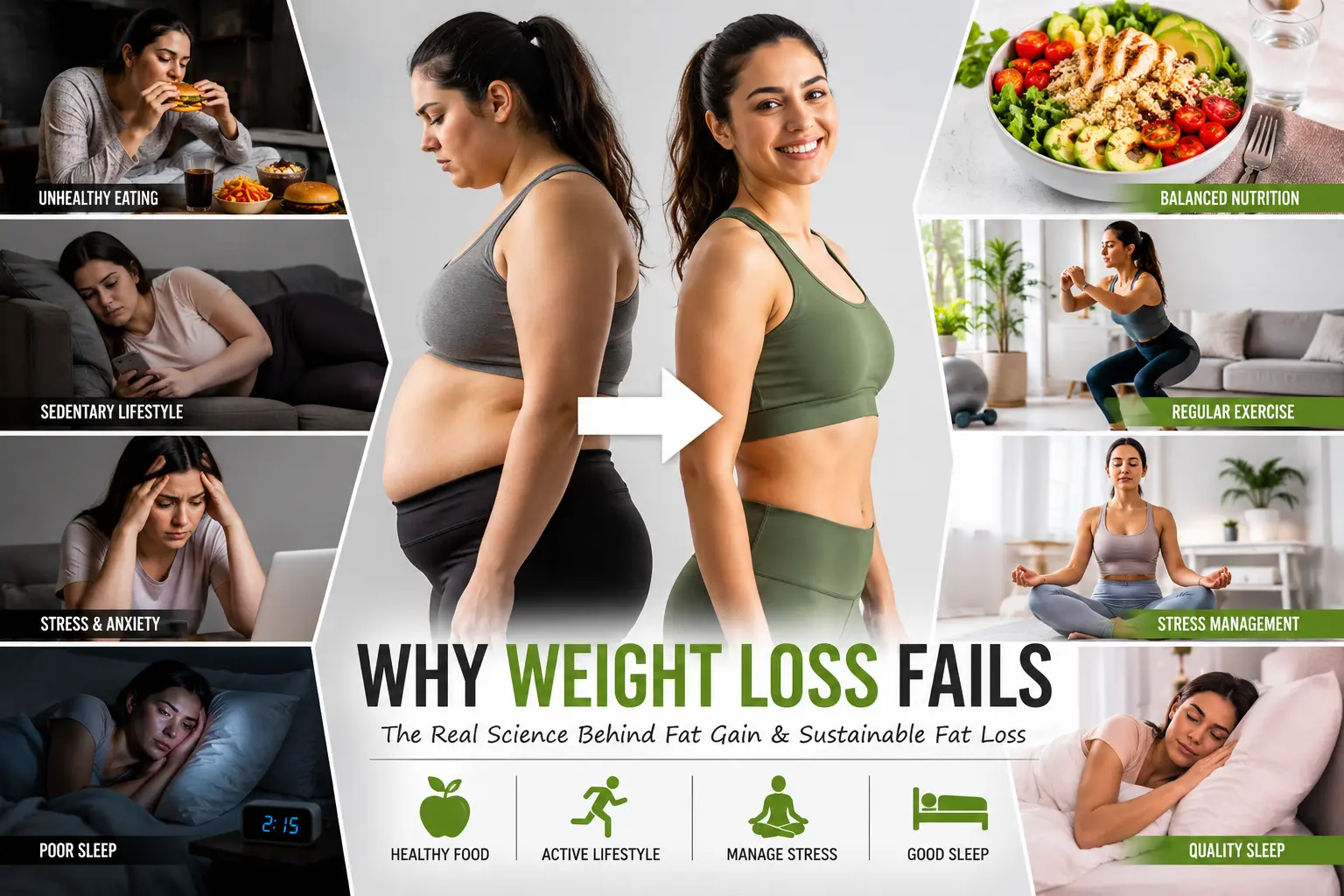
Why Most Diets Fail
Most diets fail because they focus on restriction instead of sustainability.
People often choose:
- Crash diets
- Starvation plans
- Detox programs
- Extremely low-carb diets
- Excessive workout routines
These methods may create short-term weight loss, but they are difficult to maintain.
The Problem With Extreme Dieting
When you drastically reduce calories, your body sees it as a threat.
Your metabolism slows down to conserve energy.
This means:
- You burn fewer calories
- Energy levels drop
- Hunger hormones increase
- Cravings become stronger
- Fat loss becomes harder
Eventually, most people return to old eating habits and regain the lost weight.
This is called yo-yo dieting.
Diets Ignore Human Psychology
Food is emotional.
People eat when they are:
- Stressed
- Bored
- Lonely
- Tired
- Celebrating
- Depressed
A strict diet that ignores emotional eating patterns usually fails.
Quick Fixes Don’t Build Habits
Sustainable weight loss requires lifestyle changes, not temporary punishments.
Healthy habits include:
- Balanced meals
- Portion control
- Protein intake
- Daily movement
- Sleep improvement
- Stress management
- Consistency
Without these habits, long-term success becomes difficult.
The Science of Fat Storage
To understand fat loss science, you must first understand how the body stores fat.
Your body stores extra energy as fat for survival purposes.
When you consume more calories than your body uses, the excess energy gets stored in fat cells.
Why the Body Stores Fat
Fat storage is a natural biological process.
Your body stores fat to:
- Protect organs
- Maintain hormones
- Store energy for future use
- Support survival during food shortages
Fat itself is not the enemy.
The problem occurs when fat accumulation becomes excessive due to modern lifestyle habits.
Causes of Excess Fat Gain
Several factors contribute to weight gain:
| Factor | Impact on Weight |
|---|---|
| Overeating processed foods | Increases calorie intake |
| Lack of physical activity | Reduces calorie burn |
| Poor sleep | Increases hunger hormones |
| Stress | Raises cortisol |
| Hormonal imbalance | Affects fat storage |
| Emotional eating | Leads to overeating |
| Sedentary lifestyle | Slows metabolism |
Belly Fat Causes
Belly fat is especially linked to:
- Stress
- Poor sleep
- High sugar intake
- Processed foods
- Alcohol
- Hormonal imbalance
- Lack of exercise
Visceral fat around the abdomen is more dangerous because it is linked to:
- Type 2 diabetes
- Heart disease
- High blood pressure
- Inflammation
This is why waist size matters more than just body weight.
Calories In vs Calories Out
One of the most misunderstood topics in weight loss is the concept of calorie deficit.
What Is a Calorie Deficit?
A calorie deficit happens when you consume fewer calories than your body burns.
extCalorieDeficit=extCaloriesBurned−extCaloriesConsumedext{Calorie Deficit} = ext{Calories Burned} – ext{Calories Consumed}
This is the basic principle behind fat loss.
If maintained consistently, the body starts using stored fat for energy.
Why Calories Still Matter
No matter which diet you follow:
- Keto
- Low carb
- Intermittent fasting
- Paleo
- Mediterranean
Fat loss usually occurs because a calorie deficit is created.
But Calories Are Not Everything
Two diets with equal calories can affect the body differently.
For example:
1500 Calories of Junk Food
- High sugar
- Low protein
- Poor nutrition
- Increased hunger
- Energy crashes
1500 Calories of Balanced Nutrition
- Better satiety
- More protein
- Stable energy
- Better metabolism support
Food quality matters.
Metabolism and Weight Loss
Metabolism refers to how your body converts food into energy.
Factors affecting metabolism include:
- Age
- Muscle mass
- Activity level
- Hormones
- Genetics
- Sleep quality
People with more muscle generally burn more calories at rest.
This is why strength training is important for fat loss.
Hormones and Weight Gain
Hormones play a massive role in weight management.
They influence:
- Hunger
- Cravings
- Fat storage
- Energy levels
- Metabolism
When hormones become imbalanced, losing weight becomes harder.
Important Hormones in Fat Loss
Insulin
Controls blood sugar and fat storage.
Cortisol
Stress hormone linked to belly fat.
Leptin
Signals fullness to the brain.
Ghrelin
Triggers hunger.
Thyroid Hormones
Control metabolism speed.
Understanding hormones helps explain why weight loss is not simply about “willpower.”
Insulin Explained Simply
Insulin is one of the most important hormones related to fat storage.
What Does Insulin Do?
When you eat carbohydrates, your blood sugar rises.
The pancreas releases insulin to help move sugar into cells for energy.
When Problems Begin
Frequent overeating of:
- Sugary foods
- Soft drinks
- Processed snacks
- Refined carbohydrates
can lead to insulin resistance.
What Is Insulin Resistance?
The body stops responding properly to insulin.
As a result:
- Blood sugar stays elevated
- More insulin is released
- Fat storage increases
- Hunger rises
- Weight gain becomes easier
This is a major reason why many people struggle with belly fat.
How to Improve Insulin Sensitivity
Helpful habits include:
- Eating more protein
- Reducing processed sugar
- Walking after meals
- Strength training
- Better sleep
- Weight management
Cortisol and Belly Fat
Stress is one of the biggest hidden causes of weight gain.
What Is Cortisol?
Cortisol is the body’s stress hormone.
Short-term stress is normal.
But chronic stress creates problems.
High Cortisol Levels Can Cause:
- Belly fat storage
- Sugar cravings
- Emotional eating
- Poor sleep
- Muscle breakdown
- Increased appetite
This explains why some people gain weight during stressful periods even without eating dramatically more.
Modern Lifestyle and Stress
Today’s lifestyle keeps many people in constant stress mode due to:
- Financial pressure
- Work stress
- Lack of sleep
- Social media overload
- Family responsibilities
Managing stress is essential for sustainable fat loss.
Stress Management Tips
- Meditation
- Walking
- Deep breathing
- Yoga
- Journaling
- Better sleep routines
- Exercise
Sleep and Weight Gain
Many people ignore sleep while trying to lose weight.
This is a major mistake.
Poor Sleep Disrupts Hormones
Lack of sleep affects:
- Ghrelin (hunger hormone increases)
- Leptin (fullness hormone decreases)
- Cortisol (stress hormone increases)
As a result:
- Hunger increases
- Cravings become stronger
- Energy drops
- Fat loss slows
Sleep and Belly Fat
Studies show poor sleep is linked to increased abdominal fat storage.
People who sleep less often crave:
- Sugary foods
- Fast food
- High-calorie snacks
Healthy Sleep Habits
Aim for:
- 7–9 hours of sleep
- Consistent sleep schedule
- Reduced screen time before bed
- Dark sleeping environment
- Limited caffeine late at night
Sleep is not laziness.
Sleep is part of fat loss science.
Emotional Eating and Cravings
Not all hunger is physical.
Many people eat emotionally.
Common Emotional Eating Triggers
- Stress
- Anxiety
- Sadness
- Loneliness
- Boredom
- Celebration
Food temporarily improves mood because it activates reward pathways in the brain.
Why Emotional Eating Causes Weight Gain
Emotional eating usually involves:
- High-calorie foods
- Sugar cravings
- Overeating
- Mindless snacking
This creates calorie surplus and fat gain.
How to Reduce Emotional Eating
Identify Triggers
Notice when and why cravings happen.
Avoid Extreme Restriction
Overly strict diets increase binge eating risk.
Eat Balanced Meals
Protein and fiber improve fullness.
Build Healthy Coping Habits
Try:
- Walking
- Music
- Journaling
- Talking to friends
- Meditation
Common Weight Loss Mistakes
Understanding weight loss mistakes can help you avoid frustration.
1. Skipping Meals
This often leads to overeating later.
2. Eating Too Little
Extremely low calories can slow metabolism.
3. Ignoring Protein
Protein helps:
- Preserve muscle
- Increase fullness
- Support metabolism
4. Drinking Calories
Sugary drinks add hidden calories.
5. Relying Only on Cardio
Strength training is important for metabolism.
6. Poor Consistency
Healthy habits must be maintained long-term.
7. Unrealistic Expectations
Healthy fat loss takes time.
8. Obsessing Over the Scale
Weight fluctuates due to:
- Water retention
- Hormones
- Digestion
Progress should also include:
- Energy levels
- Measurements
- Fitness improvements
- Confidence
Real-Life Weight Loss Examples
Example 1: The Busy Office Worker
Rahul skipped breakfast, worked long hours, ate fast food, and slept only 5 hours daily.
He blamed “slow metabolism.”
The real issues were:
- Stress
- Poor sleep
- Processed foods
- Inconsistent eating habits
After improving sleep, meal planning, hydration, and protein intake, he gradually lost fat sustainably.
Example 2: The Crash Diet Cycle
Priya repeatedly followed extreme diets.
She lost weight quickly but regained it every time.
Why?
Because:
- The diet was too restrictive
- Muscle mass decreased
- Hunger increased
- Old habits returned
When she focused on balanced nutrition and realistic lifestyle changes, she finally maintained long-term results.
Sustainable Fat Loss Strategy
Sustainable fat loss is about consistency, not perfection.
1. Focus on Protein Intake
Protein supports:
- Muscle maintenance
- Fullness
- Recovery
- Metabolism
Good protein sources include:
- Eggs
- Greek yogurt
- Chicken
- Fish
- Lentils
- Tofu
- Protein shakes
2. Build Balanced Meals
A healthy plate should include:
| Nutrient | Examples |
|---|---|
| Protein | Chicken, tofu, eggs |
| Fiber | Vegetables, fruits |
| Healthy fats | Nuts, seeds, olive oil |
| Smart carbs | Oats, rice, potatoes |
3. Move Daily
Exercise doesn’t need to be extreme.
Simple movement matters:
- Walking
- Strength training
- Yoga
- Cycling
- Swimming
4. Improve Sleep
Better sleep improves:
- Hunger control
- Energy
- Recovery
- Fat loss
5. Manage Stress
Chronic stress blocks progress.
6. Stay Consistent
Consistency beats perfection.
Small habits repeated daily create massive long-term results.
Smart Nutrition Planning
Meal planning helps reduce impulsive eating.
Benefits of Nutrition Planning
- Better portion control
- Reduced junk food intake
- Improved protein intake
- Consistent calorie management
- Reduced emotional eating
Beginner-Friendly Nutrition Tips
Eat Protein With Every Meal
Helps fullness and muscle support.
Increase Fiber
Fiber improves digestion and satiety.
Stay Hydrated
Sometimes thirst feels like hunger.
Avoid Liquid Sugar
Soft drinks can dramatically increase calorie intake.
Practice Portion Awareness
Healthy foods still contain calories.
Herbalife Smart Integration
Many people struggle with busy schedules, irregular meals, and poor nutrition balance.
This is where convenient nutrition tools may help support a healthy lifestyle when used properly.
Some individuals use products from Herbalife Nutrition as part of a structured wellness plan that includes:
- Balanced nutrition
- Protein intake support
- Portion management
- Healthy lifestyle coaching
- Meal planning consistency
For example:
- Protein shakes may help support daily protein goals
- Nutrition coaching can improve accountability
- Structured meal planning may reduce unhealthy snacking
However, no supplement alone creates fat loss.
Real results still depend on:
- Calorie balance
- Consistency
- Exercise
- Sleep
- Healthy lifestyle habits
Important Disclaimer
Herbalife products should only be purchased from authorized Herbalife coaches or independent associates. Purchasing products from unauthorized sellers may increase the risk of counterfeit or improperly stored products, and Herbalife Nutrition may not guarantee product authenticity from unofficial sources.
👉 Want a step-by-step guide? Read our detailed post on how to create Herbalife ID for complete instructions.
“How to Create Your Herbalife ID”
Conclusion
The real reason why weight loss fails is not lack of motivation.
Most people fail because they follow unrealistic methods that ignore the science of fat gain and human behavior.
Sustainable fat loss is not about starving yourself.
It is about:
- Balanced nutrition
- Healthy habits
- Protein intake
- Better sleep
- Stress management
- Consistency
- Smart lifestyle changes
Your body is not your enemy.
When you understand how metabolism, hormones, emotions, and nutrition work together, fat loss becomes more realistic and sustainable.
Remember:
Small daily improvements create long-term transformation.
Ready to start your healthy lifestyle journey?
At “My Health and Beauty Guide,” we believe in sustainable wellness, balanced nutrition, smart meal planning, and healthy habits that fit real life.
If you want guidance on:
- Weight management
- Protein nutrition
- Healthy lifestyle habits
- Wellness coaching
- Sustainable fat loss strategies
connect with our wellness community today and start building healthier habits one step at a time.
- why weight loss fails
- fat loss science
- metabolism and weight loss
- belly fat causes
- calorie deficit
- weight loss mistakes
- sustainable fat loss
- emotional eating
- hormones and weight gain
- healthy weight loss tips
Frequently Asked Questions (FAQ’S)
Why does weight loss fail for most people?
Weight loss often fails because people rely on extreme diets that are difficult to maintain. Poor sleep, stress, emotional eating, hormonal imbalance, and inconsistent habits also contribute.
What is the biggest mistake in fat loss?
One of the biggest mistakes is focusing only on eating less while ignoring nutrition quality, protein intake, sleep, stress, and sustainable habits.
Does metabolism affect weight loss?
Yes. Metabolism influences how many calories your body burns daily. Muscle mass, age, hormones, activity level, and sleep all affect metabolism.
What causes stubborn belly fat?
Common belly fat causes include:
Chronic stress
Poor sleep
High sugar intake
Sedentary lifestyle
Hormonal imbalance
Excess calorie intake
Is calorie deficit necessary for fat loss?
Yes. Fat loss requires a calorie deficit. However, nutrition quality and lifestyle factors also affect hunger, hormones, and sustainability.
Can stress prevent weight loss?
Chronic stress increases cortisol levels, which may increase cravings, emotional eating, and belly fat storage.
How important is protein for weight loss?
Protein is extremely important because it:
Increases fullness
Supports muscle mass
Helps metabolism
Reduces overeating